

What Is Our Current State Of Mental Health Services In Our Schools?
For Melodie Henderson, it was one of those "Tag, you're it!" moments.
"When you're an educator, oftentimes it's just you and a student at a particular, challenging time in the classroom and you have to step into their globe," says Henderson, a special education teacher at Manchester High School in Chesterfield County, Va.
That's what happened a few years ago, in the middle of Henderson's grammar instruction. A student got out of his seat without alarm, walked toward the window, and began to sob uncontrollably. Henderson approached the educatee, who quietly told her that the previous night he had made a bargain with the devil, merely wished he hadn't.
"I made a error. Give me my soul back!" he shouted. "I don't need to become!"
Henderson promised him that the school and the schoolhouse'due south staff would continue him condom. Seemingly reassured, he quietly returned to his seat.
This wasn't the get-go time Henderson had handled a situation with a student whose behavior demonstratrated a mental health concern. But this particular incident made her realize that the patchwork of resources available to educators in her school and district that were designed to help students who may be grappling with mental affliction was—although marginally useful—inadequate.
Henderson pigeon into her own research into best practices and interventions. Somewhen, she adult a workshop geared toward educators who were looking for basic information, tips, and strategies on ways to create a better learning atmosphere for students who have a mental illness. Henderson conducted the workshop at professional development conferences sponsored by the Virginia Education Association.
The workshop but "scratches the surface," Henderson says, only the educators at her presentations were always grateful for the information.
Ideally, all school districts in Virginia and across the country should be designing and implementing effective, school-based, holistic programs so that individual educators like Henderson don't have to shoulder the burden of training their colleagues.
Even though educators can be extremely effective in identifying red flags in student interactions and behaviors, says Theresa Nguyen, vice president of policy and programs at Mental Health America, "our teachers are already pushed to the max."
 "Information technology's best that they be seen every bit partners—with parents, the administration, the community—in helping students with mental health challenges," Nguyen says.
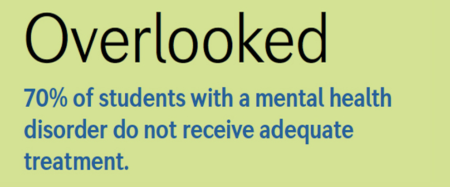
Although Nguyen and others see local and state officials beginning to expect more closely at more than substantive, evidence-based programs, the U.Southward. public education system simply isn't addressing pupil mental wellness in a comprehensive way. The magnitude of the problem cannot be overstated. At least 10 1000000 students, ages 13–18, demand some sort of professional assist with a mental health status. Low, feet, attention-deficit hyperactivity disorder (ADHD), and bipolar disorder are the nearly common mental wellness diagnoses amidst children and adolescents. And the overwhelming majority of those practise not have access to whatever handling.
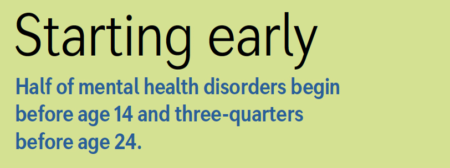
The Child Mind Found reports that half of all mental illness occurs before the age of 14, and 75 percent by the age of 24—highlighting the urgent demand to create systemic approaches to the problem.
"One in five students in this country demand treatment," says Dr. David Anderson, senior director of the Constitute's ADHD and Behavior Disorders Center. "We are seeing a real movement to properly and systematically tackle this crisis, considering what these students don't need is a 'quick fix.'"
Mental Health in Schools: Stigmas and Civilisation Shifts
The growing crisis around students' mental health, and the scarcity of available care, has long been a concern of many educators and health professionals. Interest amidst lawmakers, however, is a relatively new tendency, sparked primarily past the spate of mass shootings. In that location is also a growing awareness of the stress and anxiety gripping so many teenagers, the role of trauma in their lives, overdue scrutiny over punitive school discipline policies, and the devastating effects of poverty.
It'southward the proverbial perfect storm, says Kathy Reamy, a schoolhouse counselor in La Plata, Doctor., and chair of NEA's School Counselor Conclave.
"The public's natural response is to say we need more mental health services and programs, and nosotros do," Reamy adds.
Merely much of the national conversation has been inherently reactive, focusing on "crisis response"—to school shootings in detail—rather than a systematic approach to helping students with their mental health needs.
Crunch management is obviously important, says Anderson, only communities must besides sympathise the devastating impact untreated mental affliction has on learning.
"The enquiry is very clear that when a school has a organization-based, evidence-based, whole school arroyo, all students are more engaged academically," says Anderson.
Such programs differ just they generally provide substantive professional development for staff, workshops, resource, and accept social and emotional learning competencies integrated into the curriculum.
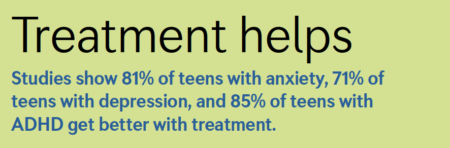
According to a 2014 study by the Centre for Health and Wellness Intendance in Schools, students who receive positive behavioral health interventions meet improvements on a range of behaviors related to academic achievement, across letter grades or test scores.
 "Improvements include increased on-task learning beliefs, better time management, strengthened goal setting and problem-solving skills, and decreased rates of absence and suspensions," the report states.
Despite the obvious render on investment, comprehensive mental wellness programs are still only scattered across the country. Many resource-starved districts take cut—or never had on staff—critical positions, namely school psychologists, undermining their schools' ability and capacity to properly address these challenges.
While districts may look at hiring more school counselors to fill gaps, Kathy Reamy cautions that their role is often misunderstood. Counselors unquestionably accept unique preparation to help students deal with the social and emotional issues that interfere with their academic success. But real comeback to school mental health programs doesn't and shouldn't end with hiring more counselors.
"The services they provide are typically responsive and brief therapy in nature," explains Reamy. "The misunderstanding of the part of the counselor oft either prevents students from coming to us at all or they come expecting long-term therapy, which we but don't have the time to provide."
The stigma effectually mental wellness is another obstacle to getting more services in schools. Fifty-fifty if services exist, stigma can forbid students from seeking help.
Nosotros're seeing progress that hopefully will continue. We can't look until a educatee is at a crisis state. Like diabetes or cancer, you should never await until stage iv to intervene." - Theresa Nguyen, Mental Health America
Withal, more students are request for help from their school. "We're finding that young people are more eager to talk almost these issues, says Nguyen. "They hunger for this type of support and chat and are looking to their school to provide it."
The fact that schools accept go essentially the de facto mental health system for students may be jarring to many educators, district leaders, and parents. As important as the task is, many run across it every bit someone else'south job. The alter in perspective is a formidable culture shift for many communities.
"What makes information technology a little tougher is the need to change how nosotros see students—specifically, thinking less most a students' argumentative behavior, for example, and more than about the reasons for that behavior," says Joe O'Callaghan, the head of Stamford Public Schools social work section in Connecticut.
Only getting there requires training, ongoing professional person evolution, and resources.
"You have to brand sure the whole school knows how to support these kids," O'Callaghan says. "Sometimes what happens is a student volition experience a lot of support and encouragement from a social worker. But so they'll go back into the school and may not receive the same understanding from the teacher, the principal, the security guard, whomever. So in a whole-school program, everybody needs to be relating to and engaging with each other over students who are experiencing difficult things in their lives."
"Tell Us What You lot Demand"
O'Callaghan helped atomic number 82 a district-wide effort to overhaul Stamford Public School's mental health program later on three students from three different loftier schools took their own lives in 2014. The shaken customs was galvanized to call back about how to improve and support the schoolhouse mental wellness programs.
"Just tell u.s.a. what you need," a member of the school board asked O'Callaghan afterwards the deaths.
The district always took student mental health seriously, evidenced by a strong team of counselors and schoolhouse psychologists, plus solid relationships with community agencies.
"We were doing a lot of things right and our squad was valued in the community," O'Callaghan recalls. "But we had to take a step back and call up systemically and comprehensively well-nigh the work we were doing."
No small undertaking for a 21-school, 16,000-student school district, with high levels of poverty and a large immigrant population.
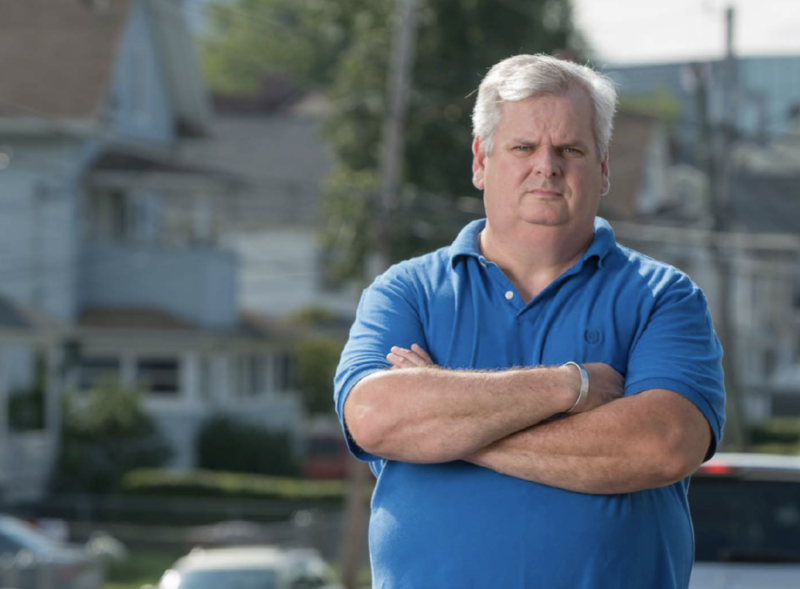 Joe O'Callaghan
The district hired the Child Wellness and Development Plant of Connecticut (CHDI) to audit mental wellness programs. The resulting 2015 report found strength in some areas, but indicated overall efforts had focused on crisis management as opposed to early identification, prevention, and routine care.
This new "continuum of care" is now the central tenant of Stamford'southward revitalized program, forth with intensive training of all staff in mental wellness issues and data collection, an area that had been sorely deficient.
The district worked with CHDI to deploy Cerebral Behavioral Intervention for Trauma in Schools (CBITS), a schoolhouse-based program for students grades five–12, who have experienced traumatic events and are suffering from post-traumatic stress disorder. The district also implemented a counterpart for grades K–five called Bounce Dorsum.
By 2017, Stamford Public Schools had expanded the number of evidence-based services for students from nothing to four, implemented district-wide trauma and behavioral health training and supports for staff, and integrated community and land resource and services for students.
The goal, explains O'Callaghan, is to create a self-sustaining, in-business firm program.
 "Other districts are outsourcing CBITS to local community agencies who are sending their own social workers into the school. There'due south nothing incorrect with that model, but we're preparation our ain staff to create our own institutional expertise."
Doing so provides a layer of protection against budget cuts or grants approaching expiration.
Even in the face of potential upkeep tightening, "we're fortunate to be role of a community that has a long history of supporting what we exercise," he adds.
In Chesterfield, Henderson is encouraged by the strides her commune has taken, namely the introduction of an SEL curriculum in the lower grades, before long hopefully in the high schools.
"We can always do more than, but I call up we're seeing a more proactive, less reactive, arroyo."
That shift is a critical outset pace forward, says Theresa Nguyen, and is indicative of many schools and communities beginning to think about mental health early.
"We're seeing progress that hopefully will continue. We can't expect until a student is at a crisis state. Similar diabetes or cancer, you should never wait until phase 4 to intervene."

What Is Our Current State Of Mental Health Services In Our Schools?,
Source: https://www.nea.org/advocating-for-change/new-from-nea/are-schools-ready-tackle-mental-health-crisis
Posted by: brauertiousbactine.blogspot.com
0 Response to "What Is Our Current State Of Mental Health Services In Our Schools?"
Post a Comment